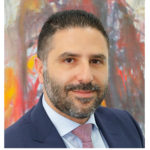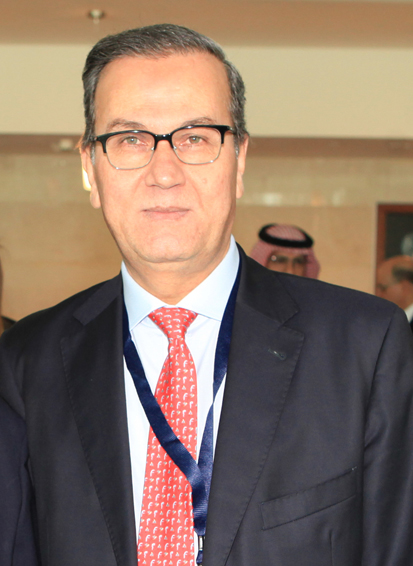
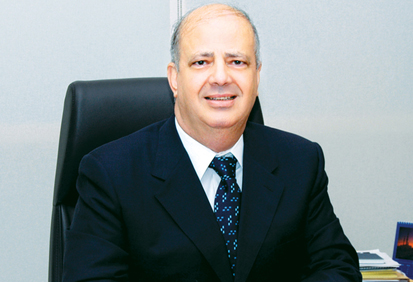
In this interview with Al Morakeb Al Ta’mini magazine, Mr. Joe Azar, CEO of Nasco Re, discussed the challenges facing the reinsurance sector with the spread of the Covid-19 and the Beirut Blast. He also talked about the most prominent developments and changes happening to the reinsurance broking sector in the world in the general and in the region in specific.
* Covid19- hit the world economies, leaving behind a big number of victims and a lot of material losses… How do you summarize the effects of this pandemic on the reinsurance broking sector?
The virus outbreak and its impact on the economic environment are putting more stress on the primary insurance players. The segment of Companies who did not invest in technology will struggle.
Luckily, the bill for Covid losses in the Mena region is believed to be rather modest. The bulk of losses is concentrated in the hospitality sector which insurance protection against infectious disease tends to be very often limited. The question as to whether these losses are fully recoverable from Underwriters remains a key concern for all concerned including reinsurance brokers.
The reduced premium volume implied by economic turmoil and premium discounts resulting from slower loss activity for lines such as Motor and health would have a material impact on the turnover of reinsurance brokers.
* Covid – 19 imposed new work patterns, the most important of which are working from home, remote communication and interaction… How do you evaluate the way the reinsurance broking companies reacted to these patterns?
Pre Covid working models are now entirely transformed, and technology has allowed reinsurance brokers and reinsurers to privilege, during lockdown periods, remote work now conducted successfully without any disruption. This is increasingly becoming the norm for the future rather than a temporary arrangement. Renewal negotiations are being made this year over communication platforms. Costs for office space and extensive travelling are now kept at a minimum, whilst investment in digital solutions and platforms will need to be increased.
* Could we possibly talk about positive impact on the reinsurance broking sector especially in the hospital and auto sectors?
Under the lockdown conditions, loss frequency has reduced considerably under both Motor and health classes of business which translated into lower claims expenditure for insurers thus improved technical results. In view these classes tend to produce the largest proportion of income retained, this pattern of positive results will boost financial results for the year.
* In addition to the challenges and natural disasters, the world is now facing the dangers of epidemic outbreaks and deadly viruses (…) Has the reinsurance broking sector benefited from the Covid-19 experience, in preparation for a future that may hide more epidemics and viruses outbreaks? What are your suggestions in this area?
Reinsurance industry losses are estimated at no less than 100 billion which would undermine earnings. The first pay outs remain modest but potential litigation and Casualty long tail create some sort of uncertainty as to ultimate cost. Communicable disease exclusion clauses are now applied to each and every reinsurance contract in the P/C lines.
* In your opinion, what are the most prominent developments and changes happening to the reinsurance broking sector in the world in general and your country in particular during 2020?
Reinsurance Environment driven by Covid and Cat losses and lower investment yields have led to double digit increase in rates in most segments of business. The pressure on retro pricing will also entail into a more disciplined underwriting approach for reinsurers.
This climate is expected to attract more risk appetite as demonstrated by Lloyd’s now looking to achieve a significant growth in their book.
Regarding the renewal trends in the Mena region, these are relatively more complicated than in the past in view Underwriters are focusing on treaty structure review to align interests. There is also a move in the direction of tightening conditions and seeking higher margins in attempt to achieve higher ROE.
Beirut Blast represented a wakeup call for reinsurers to cap reinsurance recovery limit for any conflagration in the same way this was done few years back for natural perils. In Lebanon a specific resistance to include SRCC under property treaties will create a sort of gap, which we would need also to address.
* How do you summarize the most important insurance lessons learnt from the catastrophic bombing in Beirut on the fourth of August? How did you deal with it as a company?
Nasco has formed a special task force to coordinate with all concerned with the view of ensuring a professional handling of claims involved.
We have also conducted successful negotiation with Reinsurers to accelerate the recovery of valid claims. The final position will definitely depend on the results of the investigation so we may confirm this tragedy is not caused by a peril excluded under Property policies. In meantime, many Reinsurers have accepted to arrange a payment on account which permitted insurers to start honoring claims, thus alleviating the financial burden caused by insured damages.
* What will be the prices and services momentums in the renewal?
Following many years of downward trajectory, this renewal season is sending strong signals of a very positive pricing momentum. It is incontestable the price firming journey will need to last until we reach pricing adequacy. Whilst this is a trend across all lines of business, specialty areas will attract significant adjustment to offset losses experienced in Marine, Engineering and Aviation
The volatility of property results remains a true challenge which implies a rigorous underwriting discipline. Capacity will be compressed for High rise buildings with combustible cladding, warehouses with high pile storage, industrial risks involving hazardous goods and processes
Underwriters will insist on higher retention levels, geo coding and restriction in Cat cover.
* Do you think some reinsurance broking companies will exit the market as they won’t be able to adapt to all these challenges?
Most insurers operating in the Mena region have demonstrated resilience during this difficult period. Economic slowdown, lockdown implied by the Covid, and low investment yields represent serious challenges.
This environment should give every reason to insurance Leaders to deploy strategic actions including exceptional measures to continue providing the best customer service and running business profitably.
The ability to stabilize turnover should be the immediate focus, but survival will require we re-think business models, reduce operating costs, accelerate digitalization, identify new niches and diversify revenue streams.
Insurers who cannot adapt and conduct such transformation will either collapse or exit the industry.
* Some of the Arab markets are witnessing a flow of mergers between companies… Do you have any comments in this regard? Do you support such an approach?
Most analysts believe many Arab insurance Markets remain too fragmented considering the massive number of players in relation to turnover. The concentration of the bulk of premiums in the hands of few players only is another reason to encourage mergers.
Capital increase requirements should be the key factor in accelerating the consolidation process. The players confronted to declining revenues, insolvency or financial pressure will find in M&A the right response for survival.
Digital transformation to cut cost may also require a pooling of resources leading to further consolidation. This should drive sector towards more efficiency and higher sustainability
* How do you assess the role played by the General Arab Insurance Federation? And the role played by the unions and associations of reinsurance broking companies?
Gaif founded since 1964, plays an important role in supporting to the development of Arab Insurance markets.
Gaif conferences, webinars, studies & publications actively contribute to exchanging data / experiences between markets. With the constant coordination between Members, Gaif has created the necessary platform to enhance cooperation between all markets and securing a climate for better integration whenever necessary.
* How do you summarize your achievements during 2020 and your plans for 2021?
Nasco first priority is to maintain the finest service to our clients across the Mena region. We are increasingly focused on providing proper advice on the engineering of reinsurance schemes and the selection of the best security. Regarding Cat exposure, we are also assisting our clients in conducting the Cat modeling exercise for sake of identifying the level of reinsurance protection required.
On the expansion front, we have recently started Nasco Korea in Seoul, and are strengthening our operations in Pakistan and the Indian sub-continent. Our plans to establish a stronger presence in Africa remain an essential part of our strategic plan for growth.