



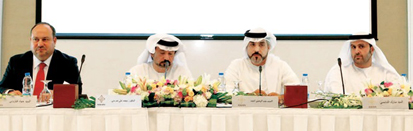


Mr. Ronald Chidiac, Broktech’s CEO, discussed in an interview with Al Morakeb Al Ta’mini magazine, the reshaping of the insurance industry, caused by the digital transformation and the changing expectations and attitudes of the region’s insurance leaders and markets.
He also mentioned that the main problem is that the Arab insurance industry is usually slow when it comes to embracing new products, therefore the stakeholders have to alter their mindset and accept the fact that the global marketplace is changing.
* Where do you see the Arab insurance industry from the digital transformation achieved at the global level?
– The digital transformation, coupled with changing expectations by customers, are reshaping our industry; which calls for an urgent need to rethink our traditional ways of doing business. From big data analytics and innovative business models to automated claim processes and self-service interactive dashboards, the global insurance industry is undergoing radical transformations and has already jumped into the digital age. However, digitization initiatives in the Arab insurance market are still very shy, and we are failing to keep pace with market evolutions and rapid technological advances. This is mainly due to cultural barriers and the lack of adequate resources and workforce, as well as the failure of the legal system in some countries to update its laws and keep up with this changing environment. However and no matter what obstacles we face, it is undeniably the fact that our market needs to evolve while leveraging on technological advances to re-create business models. Arab insurance market stakeholders can no longer have a wait-and-see attitude, and as such they need to fight the “resistance to change” culture to stay relevant in the new marketplace. Unfortunately, many Arab business owners and decision makers fear change. However, they have to alter their mindset and accept the fact that the global marketplace is changing. Let us look back at what happened to Nokia and Kodak when they refused to embrace change and were convinced that consumers will not alter their habits.
* What changes will the digital transformation in the insurance sector introduce to the fundamentals, leaders, actions and results of the industry?
– The digital transformation is the new buzzword for our industry. It has become a top priority on the agendas of industry’s leaders and a must-have component for the success of every market player, be it insurer, reinsurer, or broker.
It has already revolutionized the different facets of our industry including, without limitation, customer relationship management, risk management, underwriting decisions, claim handling, distribution channels, marketing strategies, and operational efficiency. Most customers now demand technology-based services, accessibility, speed, and a tailored experience that translates their needs. Subsequently, our traditional business processes will soon become completely obsolete.
Digital platforms and telematics insurance market are booming and according to popular global estimations, there will be more than 50 billion connected devices by 2020, up from 500 million 10 years ago; which translates into almost 15 devices per capita of active population. Not to forget the developments in artificial intelligence and their impact on the industry (Usage-based insurance, meticulous and preventive medicine, autonomous vehicles, etc.). The questions we, as Arab market leaders, need to ask ourselves are: Where do we stand today with respect to all these developments? What are our plans to thrive in a digital future? What are we willing to sacrifice today for our future tomorrow?
* Do you think that the Arab consumer is able to interact and deal positively with the digital shifts in the insurance industry?
– Most will, specially the young and middle-aged population. In fact, the Arab region has one of the youngest populations in the world with a median age not exceeding 25 and almost 40% of its citizens below the age of 30 and 95% below the age of 64. This is a great asset which insurance companies need to be able to grasp, especially that the young Arab citizens aged between 15 and 35 are already consistent users of technology.
Another opportunity for insurers lies in being able to reach people who live in rural areas, where almost no physical insurance branches are available. These rural citizens consist almost 50% of the total Arab population.
Nevertheless, digital shifts may face resistance from older generations, who usually resist changes and are not very familiar with technology. The less-educated populations may also seem reluctant to accept such changes. However, it is up to insurance firms (with the help of other industry stakeholders, of course) to raise awareness and find means to satisfy the needs of all population segments.
* Some new and complex types of insurance that keep up with the latest technological development (Cyber, auto-driven vehicles, robots, smart phones…) are currently introduced to the markets… How does the Arab insurance industry react to such products?
– Some regional markets are adapting fast but globally speaking, the Arab insurance industry is usually slow when it comes to embracing new products. For instance, on the global level cyber insurance penetration is substantially growing, accompanied with a huge spending on cyber security; whereas on the regional level, insurance companies are facing difficulties marketing cyber products due to the lack of awareness among customers on one hand and the absence of innovative and easy-to-sell covers on the other. Firms operating in the MENA region are very prone to cyber-attacks due to their weak systems, and barely a day goes by without news of a new cyber incident. Still, very few have taken serious steps to reinforce their systems’ resilience and buy cyber insurance covers. Besides, how many insurers did buy Cyber protection before promoting such cover to their clients and prospects? Not to mention that groundbreaking technologies such as robots and driverless cars will take years to gain momentum in our region, and so will their insurance covers.
Another point worth making is that telematics may be forced on citizens in some Arab countries. Instead of using telematics as a tool to promote innovation and enhance risk awareness among the public, such technology may be used to penalize citizens. Not everyone wants this future where our personal data and behaviors are simply used as a mean for punishment. Instead, telematics should be used to promote a better driving behavior by rewarding good drivers with lower insurance premiums for instance. It should also be promoted as a tool to assist drivers in preventing accidents and detecting failures.
* Numerous digital insurance companies are emerging to promote insurance policies in all areas of businesses… What are the pros and cons of such phenomenon?
– Investments in InsurTech are booming. Digital insurers such as Lemonade and Oscar Health are already a huge success.
In terms of pros, InsurTech presents numerous benefits for our industry such as cutting cost in claims, operations, product distribution, and customer acquisition, and allowing for the development of innovative, market-responsive, timely, more personalized products. It also acts as catalyst for innovations and digitization in the insurance industry. Many global insurers are already well aware of the importance of teaming up with InsurTech startups and are spending huge amounts of money in such investments. In our region, we have also witnessed some Fintech / InsurTech initiatives such as the launch of the UAE-based Democrance and two first-rate FinTech centers: the Abu Dhabi Global Market’s FinTech RegLab and the DIFC FinTech Hive. With at least 75 active Fintech startups in our region currently, the number has been growing at an annual rate of 40% since 2010.
However, as is the case with any new technology, InsurTech presents barriers and challenges to traditional insurance players. It intensifies competition and threatens the existence of some companies who fail to keep pace with the new market dynamics. It also increases cyber security risks and raises privacy concerns. Besides, it may put some jobs at risk of extinction, or at least at risk of facing a radical reshaping, especially the traditional brokerage business. History has proven that jobs have always been redefined with each technological revolution, so traditional jobs need to evolve and adapt to this change. Another drawback that may hamper the overall development of InsurTech in the region is the lack of appropriate laws to regulate this emerging trend; a fact that may give rise to controversy in this area.


