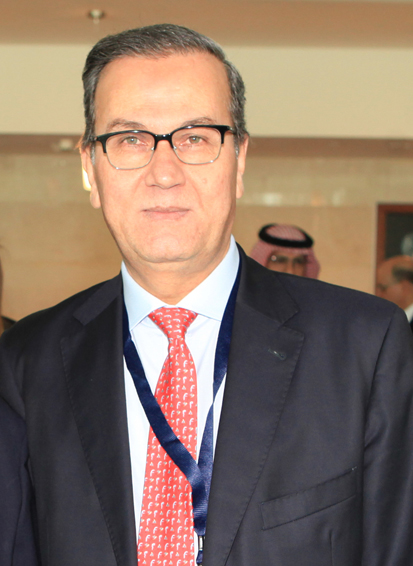
Mr. Aftab Hasan, Chairman of Risk Exchange (DIFC) Limited, talked in this interview about the latest trend of the Insurance sector in the Middle East, and the steps he believes the authorities should take to facilitate the international companies’ work and encourage them to operate in this region.
Aftab Hasan is a professional entrepreneur with resounding stake in Energy, Offshore, Marine, Oil & Gas, IT and Insurance & Reinsurance Sector. He has approximately 29 Years of professional experience serving and leading top management team with leading companies. He is an elected representative committee member and Secretary General on the Board of Insurance Business Group (IBG) under the auspices of Dubai Chamber of Commerce & Industry while serving on the Board of various business groups, social and networking organization. He is conferred with many accolades & insurance award in recognition of his outstanding contribution in enhancing insurance industry standards, his unwavering commitment to bring about regulatory change, and for his exemplary organizational skills with practical wisdom for leading by example and serving as a model of underwriting discipline, stability and continuity to place big risks and find reinsurance support, professionalism and transparency in dealing with clients. Mr. Hasan is a well-recognized name in the Middle East insurance sector. He was conferred as “Insurance Personality of the Year” at 4th Edition of UAE – India Economic Forum organized by Bloomberg Middle East & Economic Times. During, MENAIR Awards 2019 his company 'Risk Exchange (DIFC) Limited' was awarded “Most Innovative Insurance Broker” and again on behalf of ‘Arya Insurance Brokerage Co. LLC’ (Bayzat) he received the prestigious “Health Insurance and Protection Awards 2019” in the Category ‘BUSINESS INNOVATION AWARD’ at the Grosvenor House Hotel, London in presence of 850 Health Insurance Professionals from all major international health insurance companies during a glittering ceremony. This all add feathers to his crown which demonstrate his commitment, passion and drive to become one of the industry’s key movers and shakers in his respective trade.
* How do you assess the current situation of the Insurance sector in the MENA Region?
In my opinion, as you will agree with me that Dubai, Singapore and London are the three important hubs for the reinsurance sector. If we specifically speak about the MENA region the major impact comes from UAE & Saudi Arabia which are in excess of USD 10 billion, each in GWP which shows the importance of this market. Historically, due to the massive turnout of risks coming from the Middle East region to the Lloyd’s of London, the world specialist insurance & reinsurance market; was forced to start MENA region operation from DIFC in the year 2015 allowing Lloyd's to underwrite business that is brokered in Dubai, providing increased access to Lloyd's specialist expertise and tailored risk solutions. The idea behind operating from the DIFC was primarily to allow Lloyd's to benefit from an unmatched business environment represented by a dynamic, world-class regulatory system, a unique legal framework and an exceptional geographic location with Dubai being the bridge that connects the east and the west. Nevertheless, things didn’t perceived the way it was planned as the cost for operating here in the DIFC for the syndicates are higher than anywhere else in the emerging countries, and this became a real issue for lot of companies who started operation under the Lloyd’s Syndicate umbrella as they find it very difficult to mitigate and balance between the revenues and expenses. Whenever, I get a chance to voice my opinion have been bringing to the notice of the DIFC management as well as to the regulator DFSA to provide subsidy in the fee structure of startups at least for a three year period, until they reach to a certain threshold of revenue and then raise them gradually with their earning capacities to manage their OPEX.
Despite this issue, I can clearly say, that this market is not lacking any capacities on the conventional class of underwriting, but my real concern is to the Takaful industry, where we believe collectively the authorities didn’t do the required provision to support the requirement of Re-Takaful players who lacks due capacity. Due to the shortage of capacity from Re-Takaful companies, most of the Takaful operators are obliged to reach out to the conventional reinsurers to provide support in the majority of their treaties. In my opinion and suggestion, regulators should consider re-capitalization or merger of these takaful companies in order to have a strong capital adequacy ratio providing them to enhance their current capacities to underwrite various risk either standalone or through retrocession with the aim to cover themselves without the need for the conventional reinsurers.
* What are the main highlights of this year?
We didn’t see in the past year any major catastrophe losses especially in our region, and we don’t anticipate any major ones in the near future. However, and being part of this global world, the falling economies are considered the worst enemy for our sector, but I believe that even with that, we will have some delays in settling the payments but it won’t have a major impact, as the regulators are always taking all these matters into consideration. Despite over-capacity and seeming low pricing, the GCC countries still remain an attractive destination for global reinsurers. Capacity in GCC is expected to increase further driven by a large number of infrastructure projects, limited exposure to catastrophe risk and the scope for increased penetration in political, terrorism and cyber security are some of the few classes of insurance which will contribute the increase. The ongoing growth in capacity is mainly attributed from regional reinsurers including Asian suppliers rather than “traditional” reinsurers from Lloyd’s of London. Profitability is predicted to remain stable or slightly down, but the crush on margins is regarded as acceptable given the absence of catastrophic claims and relatively stable loss ratios being enjoyed by Cedents from the GCC countries. The most profitable lines of reinsurance business in GCC regions are engineering & construction, energy, and marine cargo, followed by casualty. Some country-specific regulatory factors have influenced the market drastically, for example, the compulsory health insurance regimes in Saudi Arabia and UAE (Abu Dhabi & Dubai) brings medical insurance as the fastest growing but at the same time is also one of the least profitable lines of business as a result of the limited scope for risk selection. The GCC insurance sector is geared to grow as it has experienced steady growth on the back of the economic development, population expansion, improved regulatory environment, and increased product awareness. In view of the frequency of losses experienced over the past decade especially large number of fire incidents in skyscrapers, GCC insurers are coming under pressure to increase retention levels for high-rise buildings to demonstrate their alignment of interests with those of reinsurers. Reinsurers are also tightening terms conditions and adjusting commission rates for residential and commercial property risks in this region. Though the current net retention levels are at 5% or lower on high-value risks. Some reinsurers are asking local insurers to retain a minimum of 30% of risks following a large number of fires in high-rise buildings.
* Do you foresee any rise in the prices in the near future?
We have seen a new peak in supply while capacity continues to outpace the growth of reinsurance demand, despite insurers continued efforts to optimize their view of reinsurance as capital; while expanding into growing lines of business and new innovation such as Cyber Liability etc. If we speak about current capacity it is sufficient to meet the current demand of the reinsurance market. The global economic environment continues to be a key driver for the insurance markets. Everywhere you go around the world, insurers are complaining about the constant decrease in prices, despite the capacities available in the market. Every class of risks has a different segmentation in terms of underwriting guidelines and risks mitigation. Similarly, every country has different risks and the pricing should also match that, and unfortunately this is not happening in this area where prices are at their lowest. Though demand for reinsurance capacity has increased reinsurance pricing continued trending downward, renewal across most classes of business and geographies as compared to the past three renewal seasons. We also observed that traditional reinsurance rates declined further at the key renewal time last year. Commercial insurance pricing is anticipated to keep falling at a faster rate and is expected to fall to unprofitable levels before any change is seen. The pace of reinsurance rate decreases and appears that there are no signs of any hardening in the market. The prolonged soft market continues to prevail and Cedents are enjoying plentiful and cheap capacity.
* What can be done to enhance this situation?
We should know that the evolution of oil prices plays a major role in determining sector performance in the medium term. We have observed recently that regulators in the GCC countries are more vigil than ester years and therefore have introduced new regulations that include the implementation of proper reserving, actuarial certifications, an introduction of better governance and controls and realignment of the investment portfolio. We have also witnessed that the Middle East primary market has experienced premium reduction pressure, with rates slashing down to 10 to 15 percent. Due to concentrated efforts on writing premium over underwriting have led to a loss of profits with an average combined loss ratio of 95 to 105 percent. Many local companies are now starting to look outside the region to grow their business. Reinsurance rates also remain soft despite continuing deterioration in loss experience. Certain reinsurance markets are reviewing whom they should now reinsure and which class of business they write. Specialized classes such as energy and aviation are also under pressure despite being a smaller reinsurance marketplace. Life and medical insurance markets are seeing growth due to some governments applying compulsory medical insurance and group life insurance being bought by individuals and large companies in the region. Significant growth potential for insurance in the region remains as a result of the oil and gas industries, various government initiatives to fuel growth, and an increasingly young and educated population is also one of the influencing factors in GCC. Various country regulators are applying greater regulatory pressure to insurers while smearing various licensing product restrictions, higher capital requirements, increased reinsurance limits, tougher financial accountability and compliance rules, insurers are becoming more accountable. Property appears to have the worst claims experience, with the fire still a major cause of loss.
We still have in this region the option of risks pooling, like nuclear pooling in the UAE. For example, the ministry of labor with the syndicated efforts of few local insurers started their own pooling arrangement to replace the bank guarantees for the employees which was taken by employer. And here I believe we all should gather and cooperate, insurers and governments, to be able to do more of this pooling arrangement, in other class of insurance as well which will keep this sector healthy and moving.
* Technology has strongly invaded the insurance world, as well as other service and production sectors.
– What are the new transformations that the technology brought into this sector?
I always say, if we don’t invest in technology, we will be left behind. It’s a helping tool for the underwriters, it facilitates its work and minimizes the time and effort spent to finalize any work. Technology became a necessity for underwriting, claim management and portfolio analysis. As a company, we’re working on self-developing our systems and tools. We care deeply about our clients and about serving them as fast as we can in the best, adequate and accurate way possible, therefore, we were one of the first companies to adopt and integrate the new trends of the technology at our workplace. A variety of breakthrough technologies are set to spur a fundamental transformation of the insurance industry. Technology until recently, insurance has been a virtual island in a sea of technological change. Two major impressions emerge: technology is changing the nature of risk and is enabling new products, services and channels. One of the most exciting implications resulting from these developments is expanded insurability for low-income populations especially in healthcare. Emerging technologies and innovations are beginning to transform the insurance landscape as they enable new ways to measure, control, and price risk, engage with customers, reduce cost, improve efficiency, and expand insurability. This has produced enormous opportunities for established insurers to modernize, create new insurance products and services, and shake up their business models. It has also led to the emergence of many new innovative startups seeking to significantly enhance the way insurance has traditionally been assembled, purchased, and experienced. Increasingly, incumbents are compelled to strategize about ways to routinely innovate and establish superior digital experiences in response to disruptors who have made notable inroads in the market by focusing on unmet consumer demands, lowering costs, and providing innovative new services. Going forward, both competition and partnerships between tech-savvy incumbents and increasingly well-funded and nimble new market entrants are expected to rise. This will likely fuel further innovation and transformation within the industry. At the same time, addressing issues surrounding comprehensive data regulation will grow in importance, and insurance regulators and data privacy rules will play a significant role in determining how insurers will be able to use data and also influence the level of product customization available to customers.
* What are your company's achievements in 2019 at all levels?
Since, my involvement is in both insurance as well as reinsurance sector engaged with Arya Insurance Brokerage Co. (Bayzat) and Risk Exchange DIFC Ltd. respectively as an intermediary; hence it will be appropriate for me to provide highlights of both our organization.
Arya Insurance Brokerage Co. is one of UAE’s oldest insurance brokerage company and was acquired in 2017 by Bayzat Holding Limited (Bayzat) in compliance with the laws of the UAE Insurance Authority to form the fastest-growing vertically integrated online insurance brokerage firm in the region. Bayzat is a free online platform designed to help companies manage and automate HR administration, payroll and health insurance, significantly streamlining processes for HR and finance teams. We help companies save time and money by surprising their employees with a modern benefits experience. As on date, Bayzat has raised over USD 31 million from leading venture capital firms and insurance companies and plan to invest in its technology and customer experience. Arya Insurance Brokerage has been operating in the UAE since 1988; while Bayzat the technology arm has been in operation since 2013. We are the UAE’s leading health insurance online platform, which enables individuals and companies compare, buy and use their health insurance digitally fully atomized in terms of service. Earlier this year, Bayzat has launched its own fintech products including Early-Pay on its platform to give employees unique benefits that may not be otherwise accessible to them given the size of their companies. Since the start of 2019, Bayzat’s new monthly bookings have increased tenfold and this will enable exponential growth in 2020. Although as a traditional insurance brokerage house we are a composite insurance intermediary handling all class of insurance of our client whereas we are proud to be associated with large corporates, SME’s and managing few known commercial complex, residential & office towers as well as chain of five star hotels spread from the mainland to palm island in Dubai.
'Risk Exchange (DIFC) Limited' started its operation in 2017 as a wholly owned subsidiary of ‘Risk Exchange International Holdings Pte. Ltd.’ Singapore; and operating from DIFC under Prudential Category 4 licensed by Dubai International Financial Centre (DIFC) within the regulation of Dubai Financial Services Authority (DFSA). As you are ware that Reinsurance intermediaries have a particularly important part to play in delivering innovation and choice for cedent. We provide expertise and access in niche markets where customers may have difficulty obtaining cover through mainstream channels, or for commercial business where experience, insight, and advice is critical to placing a complex risk. Although being a startup in the highly competitive reinsurance broking market we have been successful in the placement of various facultative reinsurance business locally in UAE as well as renewal of various whole account reinsurance Treaties of many credible Cedents from the Middle East & European market while bringing us closer to the objective of spreading our wings in the international market. We have access to all major domestic and international (re)insurance markets and have close relationships with top rated international reinsurance companies including Lloyds. We help clients find the best coverage at the right price that suits their needs and expectations. This is our 3rd year in business since inception. We’ve been involved in aviation, energy, property, medical, personal accident, credit life bancassurance etc. We’re working in countries like Europe, Asia, Middle East, Sri Lanka, Nepal, Africa and India as well. With confidence, I can say it was really a very good year for us and we’ve started feeling the confidence and trust of our clients. We’re also working to provide insurance solutions to 3rd party administrators in the health segment, and we’ve already signed some insurance consultancy agreements with renowned TPA in the region. We are currently in serious discussion with few Reinsurers to work as capacity partners by signing specialized MGA with special coverages in the various class of business with our technical know-how to serve various distribution channels to reach, attract and serve the insurance segment.