
The Saudi insurance sector is witnessing rapid acceleration driven by regulatory reforms, mega-projects, and an increasingly mature risk landscape. With the launch of Riyadh Re, unveiled during the Ingate Conference held in November, the Kingdom has added a new strategic pillar to support both local market growth and regional ambitions.
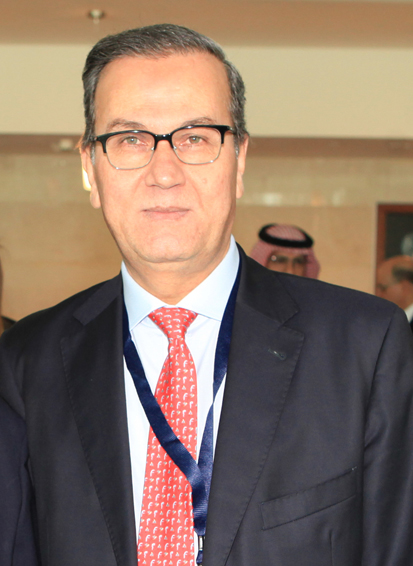
During Ingate, Al Morakeb Al Ta’amini spoke with Mr. Belhassen Tonat, CUO of Riyadh Re, to discuss the importance of the conference, the evolving insurance ecosystem in Saudi Arabia, and the emerging gaps, and opportunities, shaping the market’s future.
1. How important is the Ingate Conference for Saudi Arabia and for Riyadh Re?
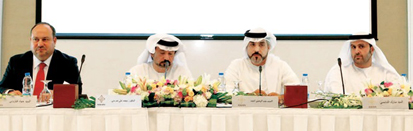
Ingate marks a significant milestone, not just as a conference, but as a platform that brings Saudi Arabia’s insurance industry closer to the global market.
As this is the first edition, I truly hope it will continue annually, because the value it created is very clear. It gathered leading international players, brokers, insurers, reinsurers, and regulatory experts under one roof, allowing real knowledge exchange.
Ingate essentially “brought Saudi Arabia to the world and brought the world to Saudi Arabia”. The Kingdom today is a magnet for major global events: the Asian Games, Expo, and the World Cup. These projects are driving massive new infrastructure and complex risks, making the Saudi risk landscape one of the most sophisticated in the region and even globally.
For Riyadh Re, Ingate offered an exceptional opportunity to showcase our launch, meet international partners, and communicate our vision. It provided a professional space where we could engage with global reinsurers, explore new treaties, and introduce Riyadh Re as a future regional champion.
Ingate has clearly opened a new chapter, one where Saudi Arabia positions itself as a central hub for insurance and reinsurance in the region, with Riyadh Re contributing to this exciting transformation.
2. How do you evaluate the insurance sector in the Kingdom of Saudi Arabia today?
The Saudi insurance sector is one of the most promising and fastest evolving markets globally. Over the next five years, we expect sustained double-digit growth, with annual expansion ranging between 20% and 30%, driven by demand and increasingly sophisticated projects.
The Kingdom is home to some of the most complex risks worldwide, from giga-projects to advanced engineering ventures. Even major international players acknowledge the technical depth and scale of risks emerging in Saudi Arabia. This complexity is reshaping the market and creating strong opportunities not only for insurers but also for reinsurers.
This environment is precisely why Riyadh Re was born. We are here to support the market’s development, but also to extend beyond Saudi borders. While our foundation is local, our ambition is regional and international, leveraging the Kingdom’s momentum to build a reinsurance player with global reach.
3. What are your main objectives for 2026, especially after the launch of Riyadh Re?
Our objectives for 2026 are clear and ambitious. With Riyadh Re officially launched, our immediate priority is to position the company as a strong reinsurance player both locally and regionally. By 2026, we aim to be fully ready for treaty business, supported by a robust technical framework and strategic partnerships.
While Saudi Arabia will continue to be one of our most important markets, our ambitions extend well beyond national borders. We will begin by strengthening our presence across the MENA region, and shortly after, expand into Asia, Africa, and Europe, a plan that will unfold within the first three years.
Our long-term vision is to build a regional reinsurance champion born in Saudi Arabia with an international footprint. The foundation has already been set: Riyadh Re is created not only to support the local insurance sector but also to elevate the Kingdom’s presence within the global reinsurance landscape.
In short, 2026 marks the beginning of Riyadh Re’s expansion journey, a journey driven by expertise, regional ambition, and a commitment to global standards.